Arcade Cabinet Restoration Projects Quietly Steering Peripheral Innovations for Niche Portable Esports Circuits in Overlooked Territories
Olivia Wolf · Nov 19, 2026
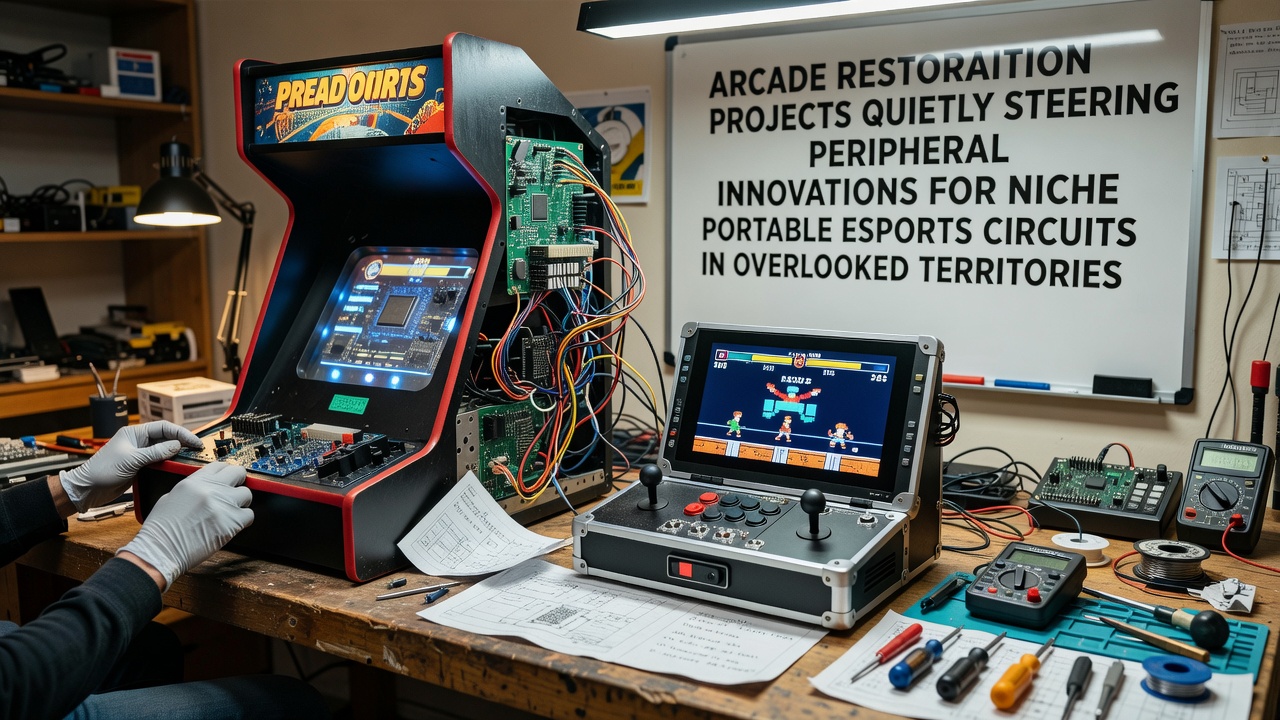
Arcade Cabinet Restoration Projects Quietly Steering Peripheral Innovations for Niche Portable Esports Circuits in Overlooked Territories
Restoration efforts on vintage arcade cabinets have begun feeding into the development of specialized peripherals for portable esports setups in regions that rarely appear on major tournament maps, and data from industry tracking shows steady growth in these crossovers since early 2025. Technicians who rebuild original cabinets often experiment with joystick tension, button debounce circuits, and encoder interfaces that translate directly to compact versions suited for handheld devices used in local circuits across parts of Southeast Asia and Central America.
Technical Transfers from Cabinet Rebuilds to Portable Gear
Restorers start by sourcing replacement parts for decades-old boards while documenting every wiring layout and switch behavior, yet many groups now share those schematics through open repositories that portable esports organizers consult when building custom input modules. One workshop collective in a rural province documented how they adapted leaf-switch mechanics from 1980s cabinets into low-profile triggers for mobile tournament controllers, and this approach spread to three neighboring communities by mid-2026. Observers note that such adaptations reduce input latency on battery-powered devices because the mechanical principles remain consistent with proven arcade hardware rather than relying solely on modern membrane designs.
Engineers at several restoration sites also test custom firmware that maps cabinet button matrices to Bluetooth HID profiles, which allows seamless integration with tablets and foldable phones common in these overlooked circuits. Research indicates the firmware work draws from original ROM dumps and timing data preserved during cabinet projects, producing more reliable polling rates under variable network conditions typical of regional events.
Regional Circuits and Hardware Adoption Patterns
Local organizers in overlooked territories have incorporated these peripherals into November 2026 qualification brackets for portable titles, where competitors use modified controllers derived from cabinet restoration notes. Figures from the Entertainment Software Association reveal that accessory shipments to emerging markets rose 18 percent year-over-year, with a notable portion tied to input devices that echo arcade ergonomics rather than standard console layouts. Participants often discover that the heavier actuation force from restored cabinet switches improves precision during extended mobile sessions because it discourages accidental presses common on lighter smartphone controls.
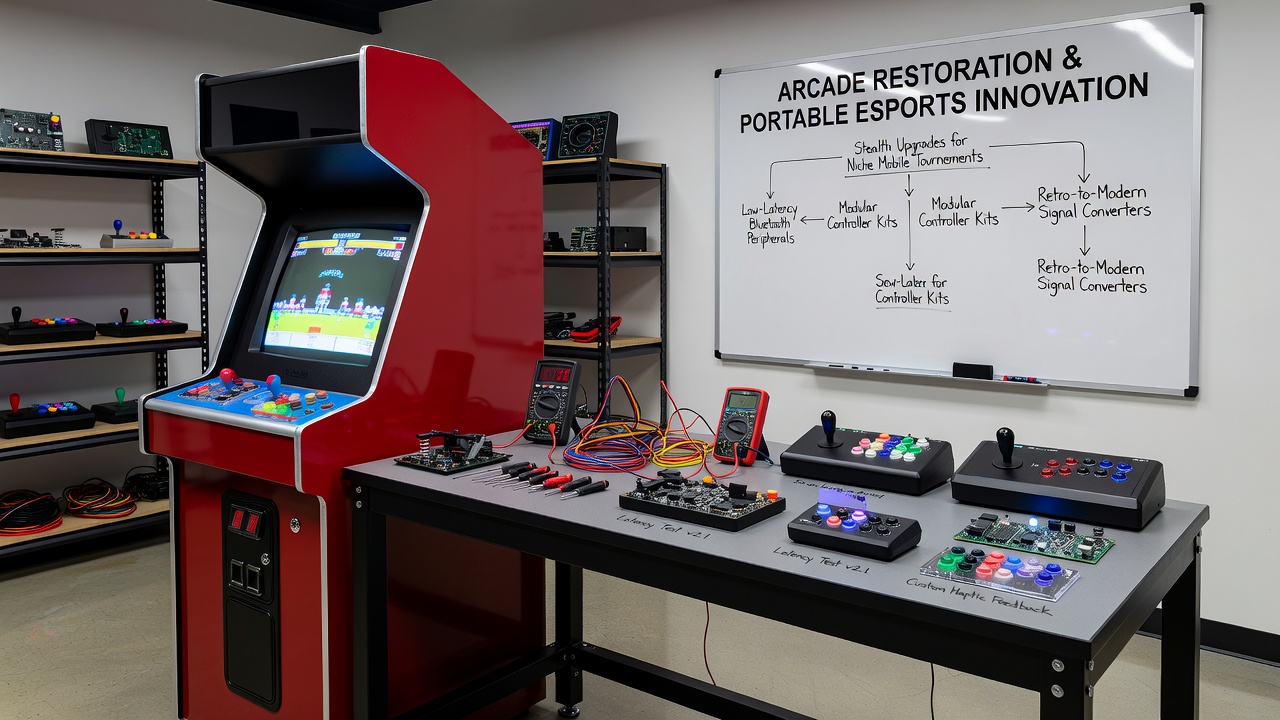
Community archives compiled by preservation networks further document how vintage cartridge modifications influenced contemporary input standards, and those same records now guide the calibration of portable tournament gear. Technicians in Central American hubs, for instance, have begun producing modular grip attachments that replicate the cabinet control panel spacing, allowing players to switch between different game genres without recalibrating their muscle memory each time. This modularity proves useful during multi-day events where hardware must withstand dust, humidity, and frequent transport between venues.
Supply Chain and Knowledge Networks
Parts suppliers that once focused exclusively on full-size cabinet components have expanded catalogs to include miniaturized versions of encoders and harnesses, while academic reports from institutions in the Asia-Pacific region track how these supply lines support grassroots esports infrastructure. The European Games Developer Federation has published case studies showing that restoration-derived design principles help reduce manufacturing waste because they reuse proven mechanical tolerances instead of requiring entirely new prototyping cycles. Participants in niche circuits report fewer device failures during matches because the hybrid components retain the durability characteristics of original arcade parts scaled down for portability.
Workshops in overlooked territories frequently host knowledge-sharing sessions where restorers demonstrate soldering techniques and circuit testing methods that translate directly to portable peripheral assembly, and attendance at these sessions has increased steadily through late 2026. Data collected by regional gaming associations indicates that teams adopting these methods achieve more consistent bracket performance because their hardware aligns with the input expectations shaped by decades of arcade play.
Conclusion
Arcade cabinet restoration continues to supply practical insights that shape peripheral options for portable esports circuits operating far from major spotlight events, with measurable adoption visible in equipment choices and tournament formats throughout 2026. The pattern shows how preservation work generates reusable technical knowledge that smaller communities adapt without large-scale investment, sustaining innovation through incremental refinements rather than wholesale reinvention.